Fiddle Leaf Fig Care Guide
The magazine cover tree with a genuine diva streak. It wants bright light, a steady routine, and to be left exactly where it is once it is happy.
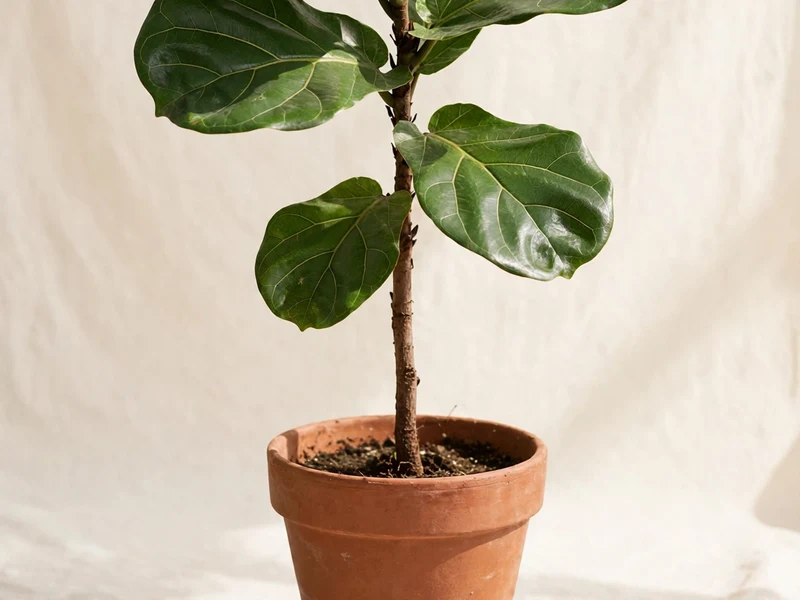
Fiddle Leaf Fig — Care Dashboard
Light
As much bright light as you can give it, a few hours of gentle direct sun included. Turn it a quarter turn weekly so it grows evenly instead of leaning.
Water
Water deeply when the top few centimetres dry out, on a rhythm rather than a whim. Inconsistent watering is the classic cause of the famous leaf drop.
Soil and potting
Use a rich but free draining mix: potting soil with bark chunks and perlite in roughly equal thirds, so water soaks in and runs out again rather than sitting. The pot must drain, and a heavy pot helps balance a tall tree. Young trees do well repotted each spring; once yours is large, scrape off and replace the top few centimetres of soil each year instead, and repot only every two or three years.
Humidity and temperature
It prefers 50 to 65 percent humidity and steady warmth between 18 and 27 degrees. What it truly hates is moving air: radiators, heating vents, air conditioning, and the blast from an opening door all dry its leaves and trigger drops. Find it a bright, calm corner and then defend that corner.
Feeding
Feed once a month through spring and summer with a balanced liquid houseplant feed at the strength on the label; this is a hungry tree when it is growing. Pale new leaves and slowing growth in the growing season are its way of asking. Stop feeding through autumn and winter while growth rests.
Propagation
Pruned tips need not go to waste. A stem cutting with two or three leaves, cut just below a node and stood in a jar of water on a bright sill, usually roots within a few weeks; pot it once the roots are several centimetres long. For a thick branch you cannot bear to shorten, air layering works too: wound the stem, wrap it in damp moss, and cut it free once roots fill the wrap.
Common problems
| Symptom | Likely cause | Fix | |
|---|---|---|---|
| Leaves dropping steadily | Watering rhythm keeps changing | Settle into a steady routine: soak fully when the top few centimetres are dry, every time | Water |
| Brown edges on the leaves | Dry air from vents and heating | Move it away from vents and radiators, and raise the humidity around it | Humidity |
| New leaves small, far apart on the stem | Not enough light | Move it to your brightest window, a little closer each few days so it can adjust | Light |
| White cottony patches in the leaf joints | Mealybugs | Wipe each one off with a cotton bud dipped in rubbing alcohol, and inspect weekly | Pests |
Quick questions
Is a fiddle leaf fig safe for pets?
No. The ASPCA lists it as toxic to cats and dogs if ingested, so it needs a room or a corner that pets leave alone.
Why does it drop leaves every time life changes?
It is famously set in its ways. A new room, a draft, or a changed watering rhythm can all trigger a sulk of falling leaves. Keep everything steady and it settles and regrows.
How tall will it grow indoors?
Given years, bright light, and steady care, it can reach the ceiling. Most home trees settle somewhere between one and three metres, growing in spurts through spring and summer.
Sources: ASPCA Toxic and Non Toxic Plants list; NC State Extension Plant Toolbox; Missouri Botanical Garden Plant Finder · Care facts last verified October 2026.